|
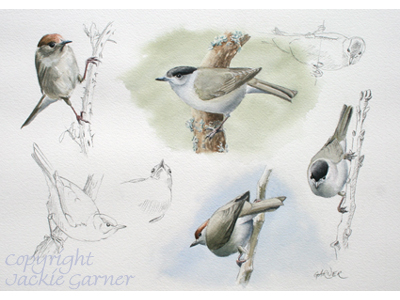
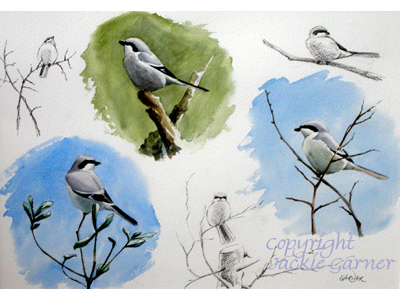
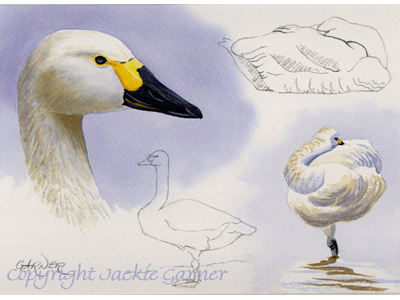
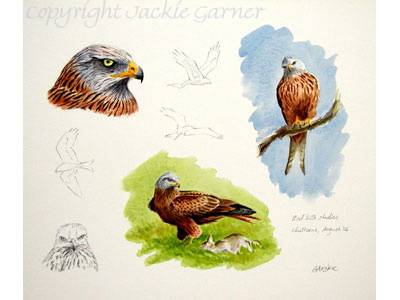
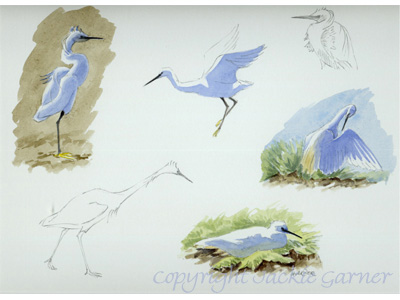
Usually I sketch in watercolours and pencil, then work up
the sketches in acrylic back in the studio. I prefer to choose
one or two species per sketching session so I build up knowledge
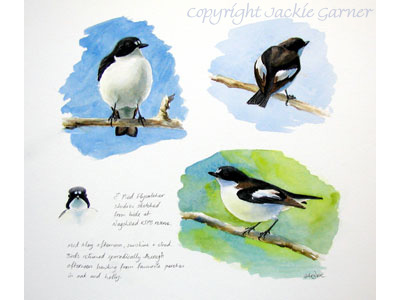
of the subject and sketch plenty of different poses. My wildlife
sketchbook page may also show habitat, colour notes and perhaps
written notes about anything that seems relevant or amusing
at the time. Sometimes I take a few photos for extra reference,
though my wildlife paintings are never just copies of a photo.
Field
sketching is fundamental to my art, as my studio work arises
from what I experienced outdoors. So in addition to my field
sketching books, I also have other sketchbooks in the studio
for testing out ideas, planning compositions and experimenting
with techniques.
Wildlife
artists are often asked what equipment to take out sketching,
so here's a quick run down of my 'must haves':
To get
a better view of my wild subjects I use fantastic Swarovski
optics: 8.5x 42EL binoculars and an ATS80HD telescope with
a 20-60 zoom eyepiece. Astoundingly good optics that I delight
in using, whether I'm sketching wildlife or birdwatching.
The angled eyepiece on the 'scope means I only have to move
my gaze a fraction to focus on the wild animal or bird and
my sketch. My old 'scope had a straight through eyepiece but
I've recently swapped and now wish I'd made the switch years
ago!
My rucksack
contains sketchbook, pencils (3B-9B), oil and soft pastels,
compressed charcoal and watercolours. The sketchbook is a
hardback A4 with smooth but thick paper, heavy enough to take
a watercolour wash without cockling. Watercolours are a mixture
of makes, all artists' quality half pans. I carry a number
of brushes, making sure there's a good selection of size and
shape. I'm starting to work larger (A2) in the field, hence
experimenting with charcoal and pastels. Arboreta cartridge
is my preferred paper: the off-white colour has less glare
in bright light than pure white.
And no
wildlife sketching session would be complete without a flask
of coffee and some emergency chocolate. It's amazing how often
an emergency can occur!
|